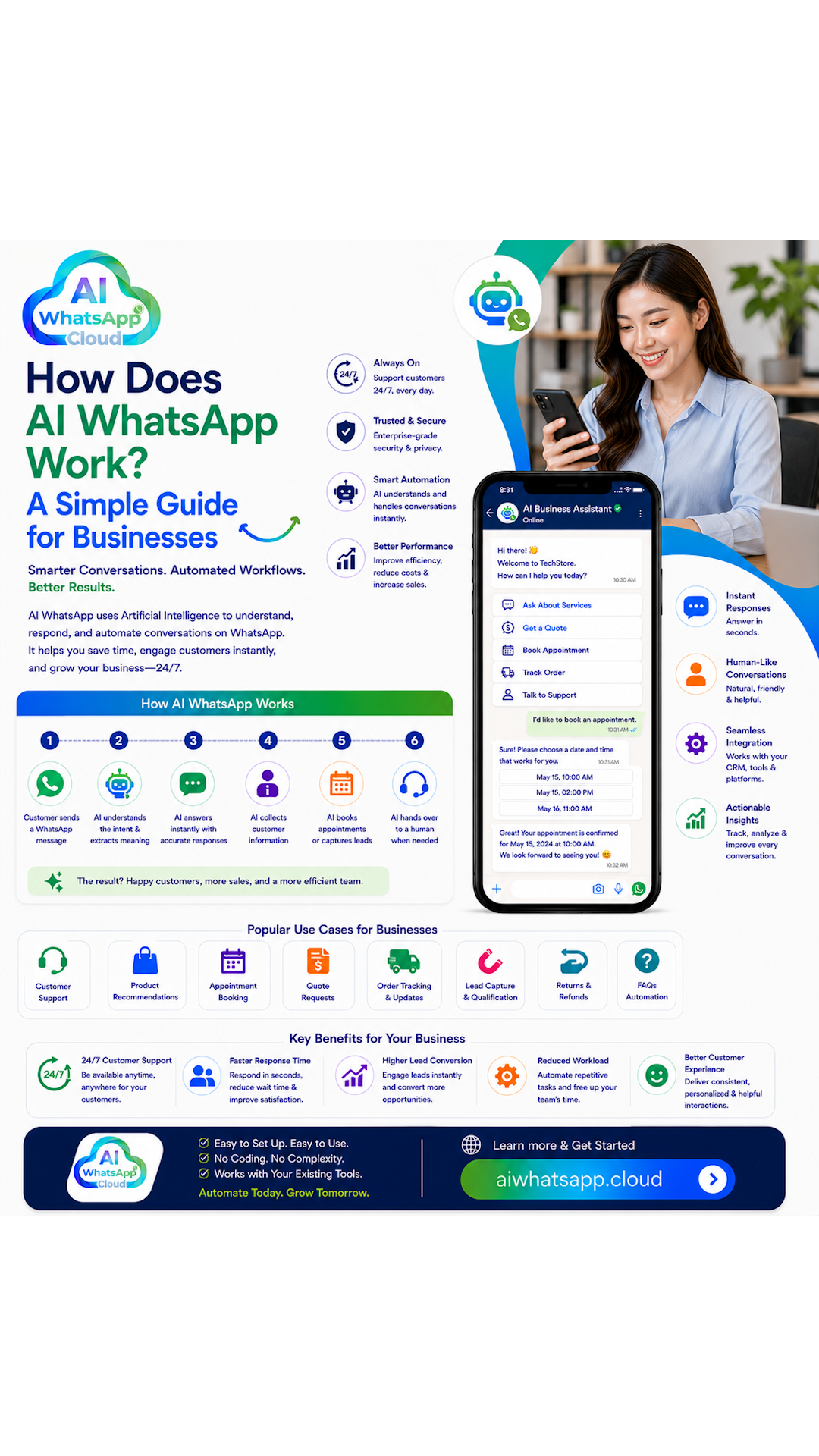
How Does AI WhatsApp Work? A Simple Guide for Businesses
Many businesses are interested in AI WhatsApp.
But one common question is:
How does AI WhatsApp actually work?
Is it just an automatic reply?
Does it understand customer messages?
Can it answer questions about a specific business?
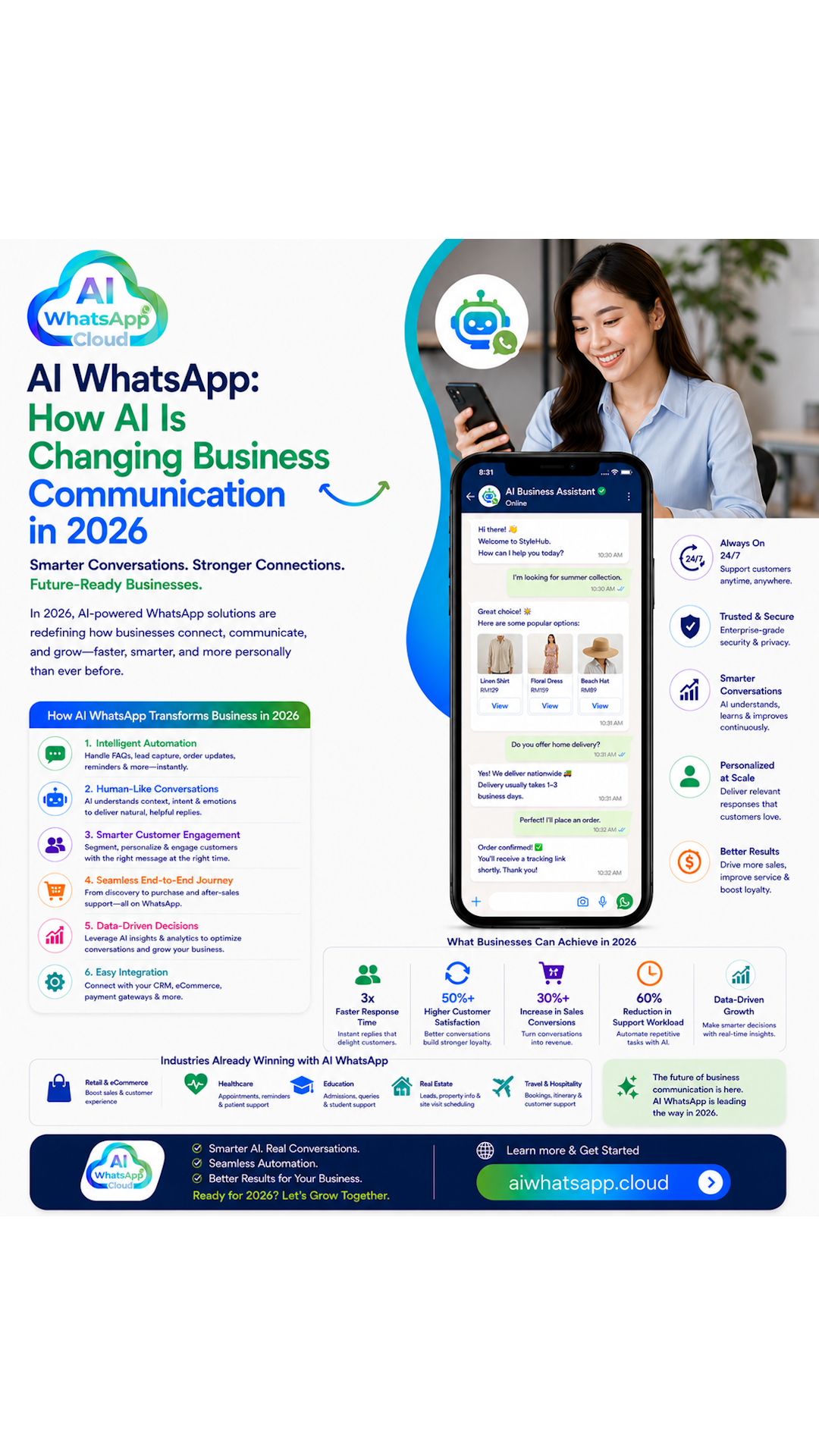
The simple answer is that AI WhatsApp combines WhatsApp conversations, artificial intelligence, business information and automated workflows to help businesses manage customer communication.
In this guide, we will explain how AI WhatsApp works step by step.
How Does AI WhatsApp Work?
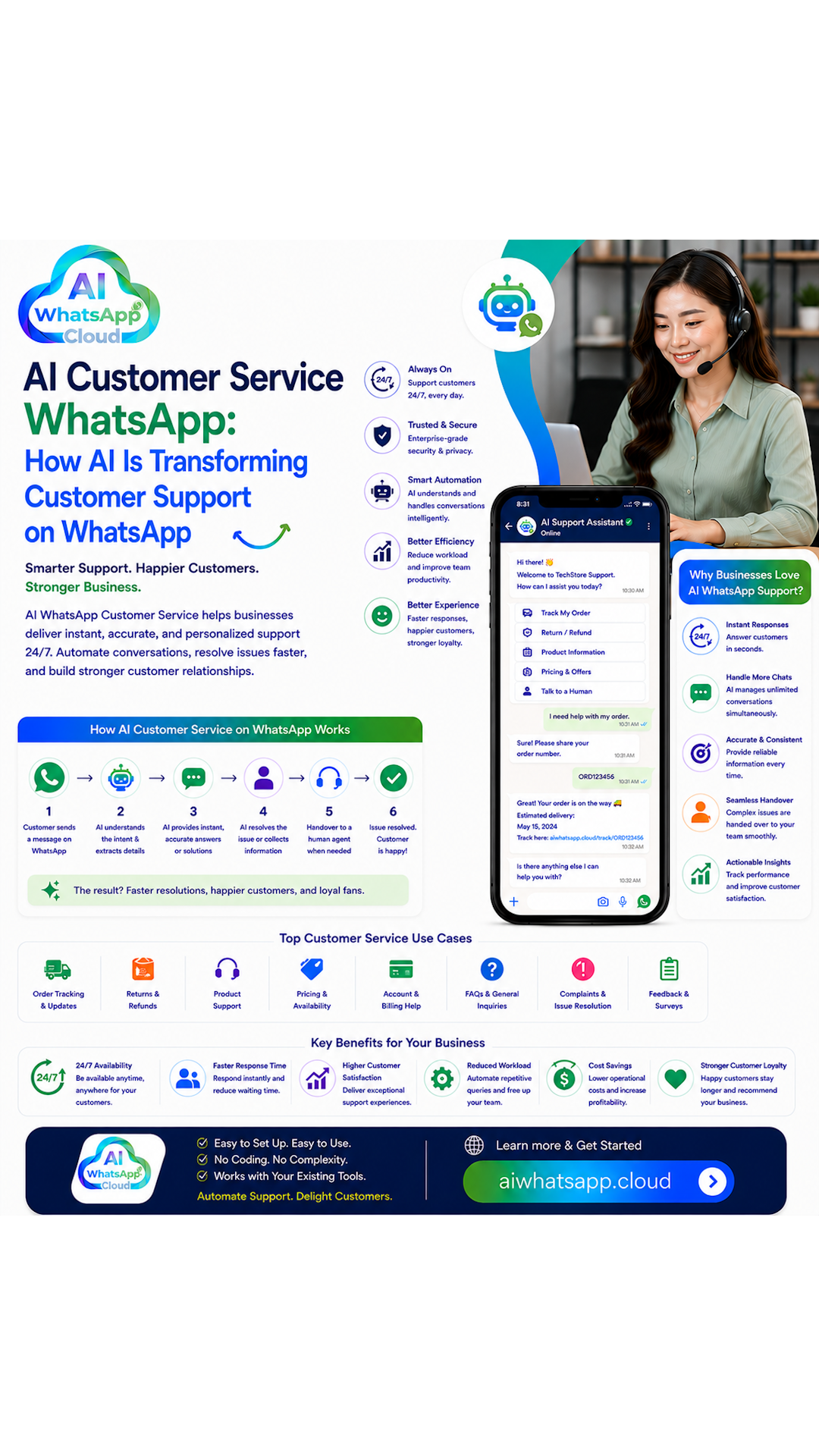
A typical AI WhatsApp conversation follows a simple process:
Customer sends a message → AI understands the message → AI checks business information → AI follows the correct workflow → AI responds → Human takes over when necessary.
Let's look at each step in detail.
Step 1: The Customer Sends a WhatsApp Message
Everything starts with a customer message.
For example:
"Hi, I want to book an appointment."
Or:
"How much is your service?"
Or:
"Do you deliver to my area?"
The customer does not always use a specific keyword.
They may write the message naturally.
This is where AI WhatsApp becomes different from simple rule-based automation.
Step 2: AI Understands the Customer's Message
The AI analyses the message.
It tries to understand what the customer wants.
For example:
"I want to make a booking for next week."
The AI may understand that the customer is interested in an appointment.
Another customer may write:
"Can I come in next Tuesday?"
The wording is different.
However, the customer may have a similar intention.
AI WhatsApp helps businesses handle more natural customer conversations.
Step 3: AI Identifies the Customer's Intent
The next step is understanding the customer's intent.
Customer messages may have different purposes.
For example:
- Asking about price
- Asking about a product
- Booking an appointment
- Requesting customer support
- Asking about delivery
- Making a sales enquiry
The AI helps identify the type of conversation.
This allows the system to select a more relevant workflow.
Step 4: AI Uses Business Information
AI WhatsApp needs business information to provide useful answers.
This may include:
- Products
- Services
- Pricing information
- Business hours
- Location
- Frequently asked questions
- Business policies
For example, a dental clinic may provide information about its services.
A hotel may provide information about room types.
A logistics company may provide information about its services.
The AI can then use the relevant business information when responding to customers.
AI Does Not Automatically Know Your Business
This is an important point.
AI WhatsApp should not simply invent business information.
The AI needs to be connected to the business information and rules used by the business.
The better the business information and workflow, the more useful the AI WhatsApp experience can become.
Step 5: AI Chooses the Correct Workflow
After understanding the customer's message, the AI can follow a business workflow.
For example:
Customer: "I want to book an appointment."
The workflow may be:
- Ask what service the customer needs
- Ask for the preferred date
- Ask for the preferred time
- Collect customer details
- Continue with the booking process
Another customer may ask about pricing.
The workflow may be completely different.
This is how AI WhatsApp can support different types of customer conversations.
Step 6: AI Responds to the Customer
The AI then provides a response.
For example:
"Sure! What service would you like to book?"
The conversation can continue naturally.
The AI may ask follow-up questions based on the customer's previous message.
This is different from sending the same automatic message to every customer.
What Is the Difference Between AI and a Fixed Chatbot?
A fixed chatbot normally follows predefined rules.
For example:
Customer types "1" → Send Message A.
Customer types "2" → Send Message B.
This can be useful for simple menus.
However, customers do not always follow a menu.
They may write:
"I want to know if you have something available next week."
An AI system can help understand the meaning of the message.
This is why AI WhatsApp is more flexible than basic rule-based automation.
Step 7: AI Remembers the Conversation Context
Customer conversations usually contain multiple messages.
For example:
Customer: "How much is it?"
Business: "Our service starts from RM100."
Customer: "What about next Friday?"
The customer expects the business to understand the conversation.
AI WhatsApp can use the conversation context to help continue the conversation.
This creates a more natural customer experience.
Step 8: AI Asks Follow-Up Questions
AI WhatsApp does not always need to answer immediately.
Sometimes, it needs more information.
For example:
"I want to order a cake."
The AI may need to ask:
"What size cake would you like?"
Then:
"What date do you need it?"
Then:
"What flavour would you prefer?"
The AI can help collect the information required by the business workflow.
How Does AI WhatsApp Work for Appointment Booking?
Appointment booking is one of the most common AI WhatsApp use cases.
The process may look like this:
Customer sends a message
"I want to book an appointment."
AI identifies the intent
The customer wants to make a booking.
AI asks questions
"What service would you like?"
Customer replies
"Dental cleaning."
AI continues
"What date would you prefer?"
The exact workflow depends on the business.
The important point is that AI WhatsApp can help guide the conversation.
How Does AI WhatsApp Work for Sales?
AI WhatsApp can also support sales conversations.
For example:
"I'm looking for a delivery service for my business."
The AI may ask:
"What type of delivery do you need?"
Then:
"Which locations do you serve?"
The AI helps collect information.
This can help a business understand the customer's requirements before a sales team member takes over.
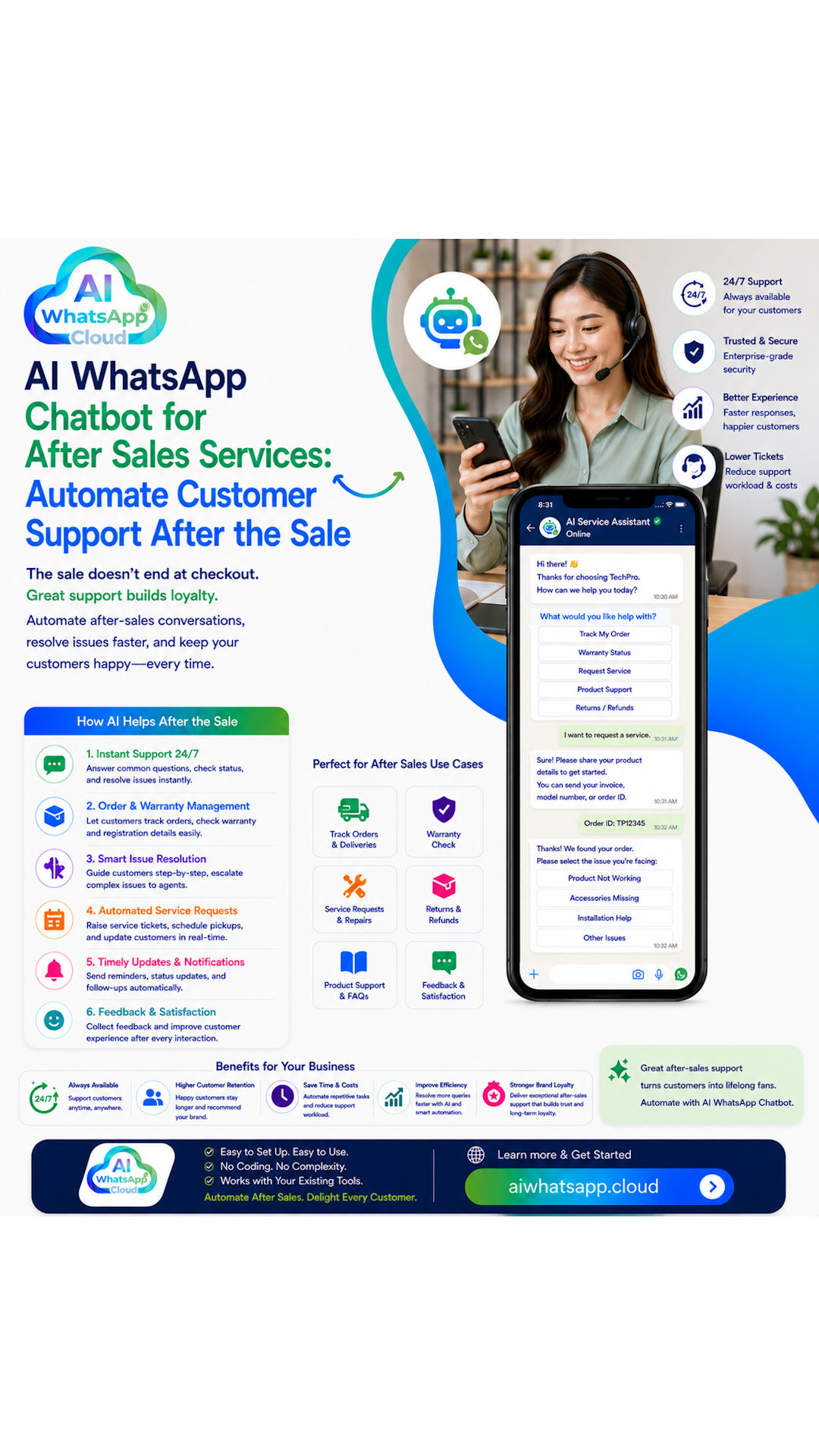
How Does AI WhatsApp Work for Customer Support?
Customer support conversations can also be automated.
For example:
"I need help with my order."
The AI may ask for order information.
It may provide information based on the business workflow.
If the question is complex, the conversation can be transferred to a human team member.
What Is Human Handover in AI WhatsApp?
Human handover means that a staff member can take over the conversation.
This is very important.
AI should not be forced to handle every situation.
For example, a customer may have a complicated complaint.
A customer may have a special request.
A high-value sales enquiry may require a human sales person.
In these situations, AI WhatsApp can support the initial conversation before a human takes over.
Meta's business AI direction also emphasizes that businesses can decide when a team member steps in to support a customer. :contentReference[oaicite:1]{index=1}
Does AI WhatsApp Work 24/7?
AI systems can help businesses respond outside normal working hours.
This is useful because customers may send messages at night, during weekends or on public holidays.
For example:
"Hi, I want to know more about your service."
The customer may not want to wait until the next morning.
AI WhatsApp can help provide an initial response and continue the conversation based on the business workflow.
How Does AI WhatsApp Work With WhatsApp?
AI WhatsApp works through a WhatsApp business communication setup.
The exact technical architecture depends on the solution.
A typical business system may include:
- WhatsApp communication
- AI processing
- Business information
- Conversation workflows
- Customer data
- Human support tools
For more advanced business communication, WhatsApp also supports structured experiences such as Flows, which can be used for tasks such as appointment booking and other business processes inside a chat. :contentReference[oaicite:2]{index=2}
Does AI WhatsApp Need a Website?
No.
A business does not necessarily need a website for a customer to start a WhatsApp conversation.
The customer can start directly on WhatsApp.
However, a website and AI WhatsApp can work together.
For example:
Customer visits website → Customer clicks WhatsApp → AI WhatsApp continues the conversation.
This can create a smooth customer journey.
How Does AI WhatsApp Learn About a Business?
The AI needs business information.
Depending on the system, businesses may provide:
- Business documents
- Product information
- Service information
- FAQs
- Pricing
- Customer service rules
The AI can then use this information to support customer conversations.
The business should also review conversations regularly.
This helps identify missing information and improve the AI workflow.
What Happens If AI Does Not Understand the Customer?
No AI system understands every message perfectly.
A customer may send an unclear message.
The customer may use slang.
The customer may combine several questions in one message.
In this situation, the AI should ask for clarification.
For example:
"Could you tell me a little more about what you need help with?"
If the conversation remains complex, human handover can be used.
Is AI WhatsApp Fully Automatic?
It can automate many parts of a customer conversation.
However, businesses should decide how much automation they want.
Some businesses may automate FAQs.
Others may automate lead qualification.
Some may automate appointment enquiries.
The best approach is usually to automate repetitive conversations while keeping human support available for complex situations.
Why Are Businesses Using AI WhatsApp?
Businesses are interested in AI WhatsApp for several reasons.
Faster Customer Responses
Customers can receive an initial response more quickly.
More Consistent Communication
The business can create structured communication workflows.
Less Repetitive Work
Staff spend less time answering the same basic questions.
Better Lead Management
Customer enquiries can be collected and organised.
Support Outside Business Hours
AI can help businesses manage initial customer conversations outside normal working hours.
AI WhatsApp Is More Than an Automatic Reply
This is the most important concept.
AI WhatsApp is not simply:
"Customer sends message → Automatic reply."
A modern AI WhatsApp workflow can understand the customer message, identify the conversation purpose, use business information, ask follow-up questions and continue the conversation based on the business workflow.
The goal is to create a smarter customer conversation.
Final Thoughts
So, how does AI WhatsApp work?
The process is simple to understand:
A customer sends a WhatsApp message.
AI analyses the message.
The system identifies the customer's intent.
AI uses relevant business information.
The correct workflow is selected.
AI responds and continues the conversation.
A human can take over when necessary.
AI WhatsApp is becoming an important way for businesses to manage customer communication.
If you want to explore how AI WhatsApp can help your business automate customer conversations, visit AIWhatsApp.Cloud and discover a smarter way to communicate with customers on WhatsApp.