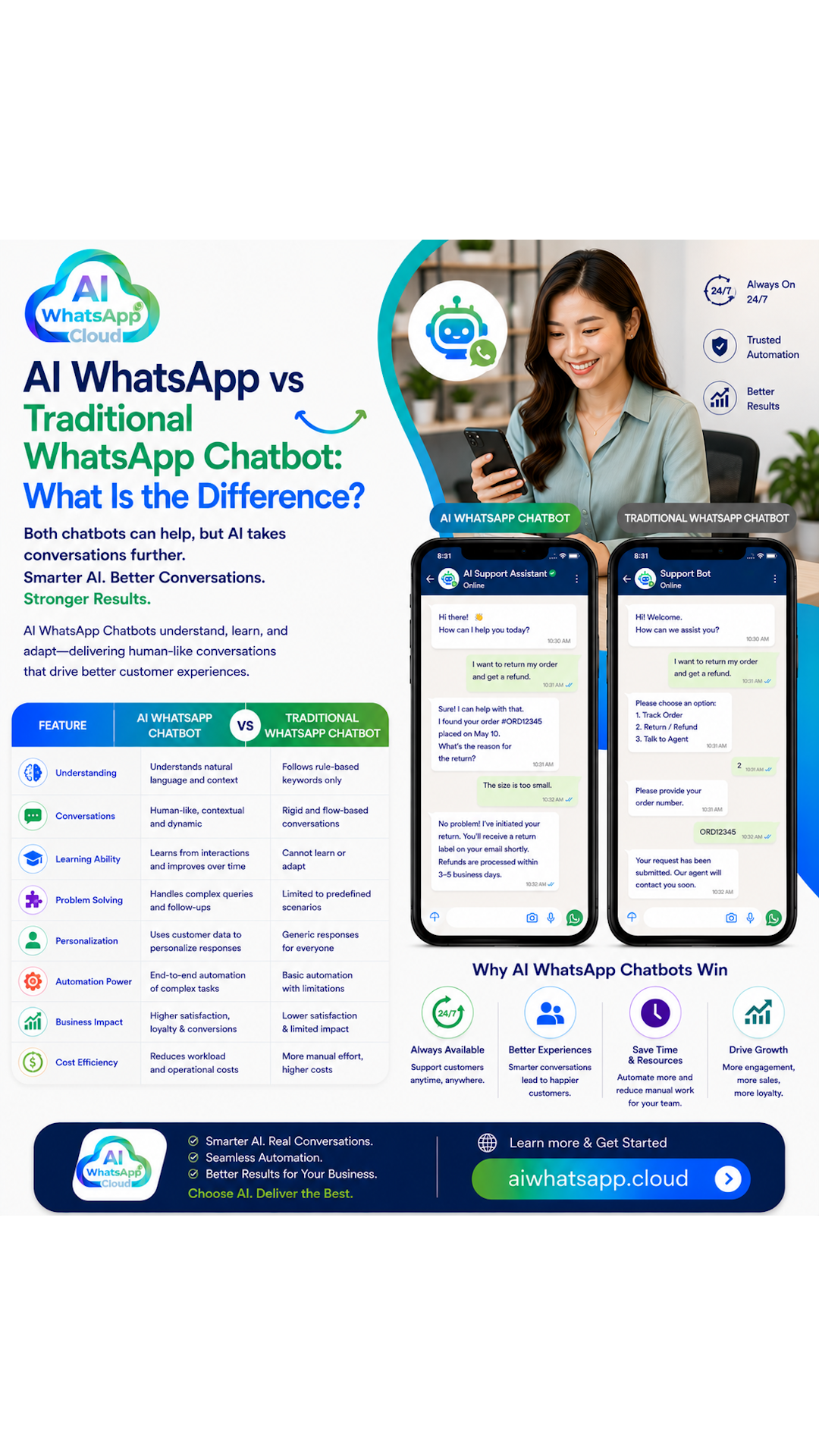
AI WhatsApp vs Traditional WhatsApp Chatbot: What Is the Difference?
Many businesses use the terms AI WhatsApp and WhatsApp chatbot as if they mean the same thing.
They do not.
Both can help businesses automate customer communication.
But the way they understand and manage conversations can be very different.
A traditional WhatsApp chatbot usually follows a fixed set of rules.
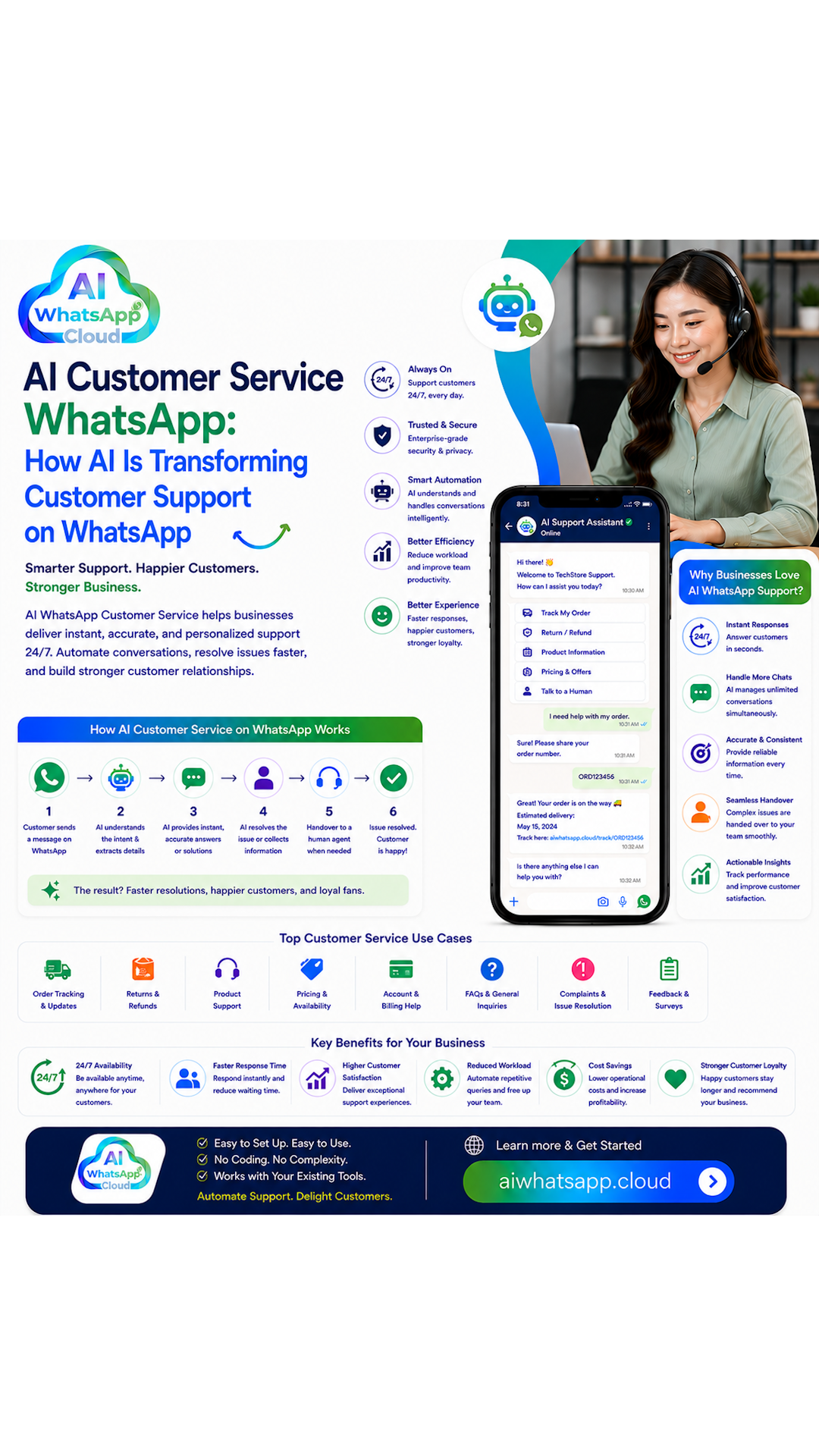
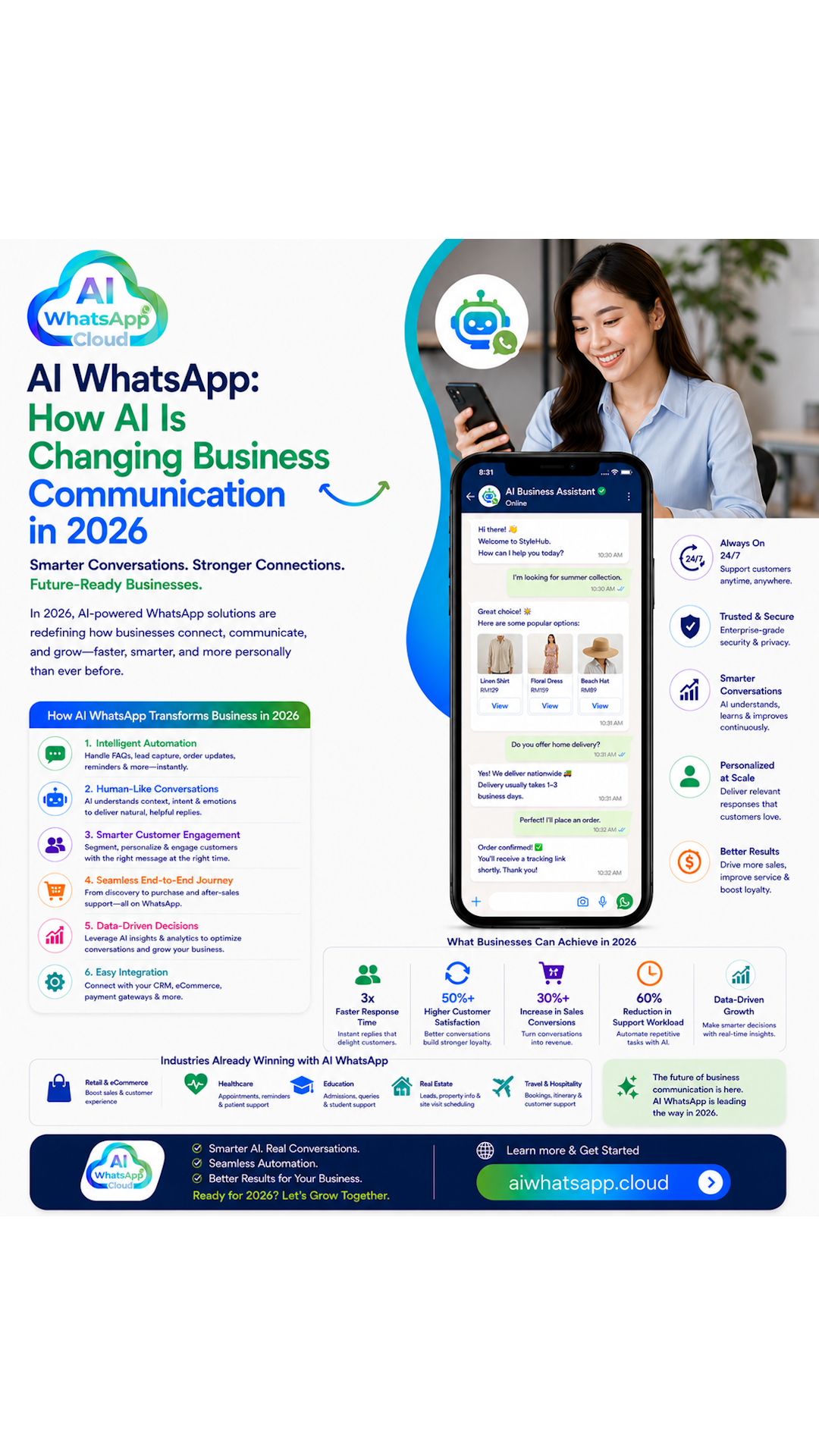
AI WhatsApp automation is designed to understand the customer's message and respond based on the context of the conversation.
This difference is becoming increasingly important for businesses that receive a high volume of WhatsApp enquiries.
What Is a Traditional WhatsApp Chatbot?
A traditional WhatsApp chatbot usually works with predefined rules.
The business creates a conversation flow.
For example:
Press 1 for Sales.
Press 2 for Support.
Press 3 for Pricing.
The customer then selects an option.
The chatbot follows the programmed path.
This type of automation can be useful for simple and predictable workflows.
For example:
- Menu selection
- Order status
- Basic information
- Simple FAQ flows
However, the conversation can become difficult when the customer does not follow the expected flow.
What Is AI WhatsApp Automation?
AI WhatsApp automation uses artificial intelligence to understand customer messages in a more conversational way.
A customer may write:
“Hey, I need help choosing the right package for my business.”
An AI WhatsApp assistant can understand that the customer is looking for guidance.
It may respond:
“Sure, I can help. What type of business are you running?”
The conversation can then continue based on the customer's answer.
The customer does not need to find the correct menu option.
The conversation is more natural.
AI WhatsApp vs Traditional Chatbot: The Main Difference
The biggest difference is simple.
A traditional chatbot follows a flow.
AI WhatsApp understands a conversation.
This does not mean that AI should replace every traditional automation workflow.
In fact, the best business automation systems often combine both.
Rules can be used for specific actions.
AI can be used to understand the customer's message and guide the conversation.
1. How They Understand Customer Messages
Traditional Chatbot
A traditional chatbot may depend on:
- Buttons
- Keywords
- Menu selections
- Fixed conversation paths
For example:
“Type PRICE to see pricing.”
If the customer writes something different, the chatbot may not know what to do.
AI WhatsApp
AI WhatsApp can understand different ways of asking the same question.
A customer may write:
“How much?”
“What is the price?”
“Can you send me your package rates?”
“I want to know your fees.”
The intent is similar.
AI can understand the broader meaning of the customer's message.
2. How They Handle Unexpected Questions
Customers do not always follow a perfect conversation flow.
A customer may suddenly ask:
“Do you also serve businesses?”
A traditional chatbot may not know how to handle the question.
The conversation could stop.
An AI WhatsApp assistant can understand the question and respond based on the business information available to it.
This creates a more flexible customer experience.
3. How They Qualify Leads
Lead qualification is one of the biggest differences between traditional automation and AI WhatsApp automation.
A traditional chatbot may ask:
“What is your budget?”
Then:
“What is your location?”
Then:
“What service do you need?”
The flow is fixed.
An AI WhatsApp assistant can ask questions based on the customer's answers.
For example:
Customer: “I need help with WhatsApp automation for my dental clinic.”
The AI may respond:
“Sure. Are you mainly looking to automate patient enquiries, appointment bookings or both?”
The next question is based on the conversation.
This creates a more natural lead qualification process.
4. AI WhatsApp Can Handle Different Industries
Traditional chatbots often require a specific flow for each use case.
AI WhatsApp automation can be configured around the business's information and workflow.
For example, the same type of AI WhatsApp system can support:
- Dental clinics
- Real estate agents
- Tuition centres
- Logistics companies
- Pet hotels
- Aircon servicing businesses
- Beauty salons
The industry is different.
But the AI can be configured to understand the business context.
5. AI WhatsApp Can Support Human Handover
One of the biggest misconceptions about AI is that it must handle every conversation.
That is not how a good AI WhatsApp automation workflow should work.
Some conversations require a human.
For example:
“I have a special request.”
“I want to make a complaint.”
“Can someone call me?”
The AI can recognise that the conversation should be handed to a human team member.
The customer does not need to start the entire conversation again.
The human team can continue with the existing conversation context.
AI WhatsApp Does Not Mean Full Automation
This is an important point.
AI WhatsApp automation is not about removing humans from the customer journey.
It is about deciding which parts of the conversation should be automated and which parts should be handled by people.
The AI can handle:
- First responses
- Common questions
- Information collection
- Lead qualification
The human team can handle:
- Complex questions
- Sales decisions
- Negotiations
- Special customer requests
The best workflow is usually a combination of AI and human support.
A Simple Example: Traditional Chatbot vs AI WhatsApp
Imagine a customer sends:
“Hi, I need help with my business WhatsApp.”
Traditional Chatbot
The customer may see:
Welcome.
- Sales
- Support
- Pricing
The customer must choose an option.
AI WhatsApp
The AI may respond:
“Sure, I can help. Are you looking to automate customer enquiries, sales leads or appointment bookings?”
The customer can answer naturally.
The conversation continues based on the customer's needs.
Which One Is Better for Your Business?
The answer depends on your business workflow.
A traditional chatbot may be suitable if:
- Your conversation is very predictable
- You only need simple menu automation
- Customers follow a fixed process
- Your workflow has limited options
AI WhatsApp may be more suitable if:
- Customers ask questions in different ways
- You receive many different types of enquiries
- You need to qualify leads
- You want more natural conversations
- You need human handover
- Your business has complex services
For many modern businesses, the question is not whether to use a chatbot or AI.
The better question is:
Which parts of your WhatsApp customer journey should use rules, and which parts should use AI?
Why AI WhatsApp Automation Is Becoming More Important
Customers already use WhatsApp to communicate with businesses.
They do not want to learn a new system.
They want to send a message and receive a useful response.
As businesses receive more customer conversations, manual replies become increasingly difficult to manage.
AI WhatsApp automation helps businesses respond faster and create a more organised customer communication workflow.
The focus is moving from simple automated messages to more intelligent business conversations.
How to Start with AI WhatsApp Automation
Businesses do not need to automate everything immediately.
A practical approach is to start with one workflow.
For example:
Step 1: Identify Your Most Repetitive WhatsApp Questions
What questions does your team answer every day?
Step 2: Identify Your Most Valuable Leads
What information does your sales or service team need?
Step 3: Create the AI Conversation
Let the AI answer common questions and ask useful follow-up questions.
Step 4: Define Human Handover Rules
Decide when a human team member should take over.
Step 5: Improve the Workflow
Review conversations and improve the AI knowledge and workflow over time.
Final Thoughts
Traditional WhatsApp chatbots and AI WhatsApp automation are not the same.
A traditional chatbot follows predefined rules.
AI WhatsApp automation can understand customer messages and manage more natural conversations.
For businesses that receive simple and predictable enquiries, traditional automation may be enough.
For businesses that receive different questions, need lead qualification and want more flexible customer communication, AI WhatsApp automation can provide a more intelligent approach.
The future of WhatsApp business communication is not just about automated replies. It is about understanding what the customer is trying to achieve and helping them reach the next step.
If you want to learn how AI WhatsApp automation can help your business manage customer conversations, visit AIWhatsApp.Cloud to explore AI-powered WhatsApp automation for modern businesses.