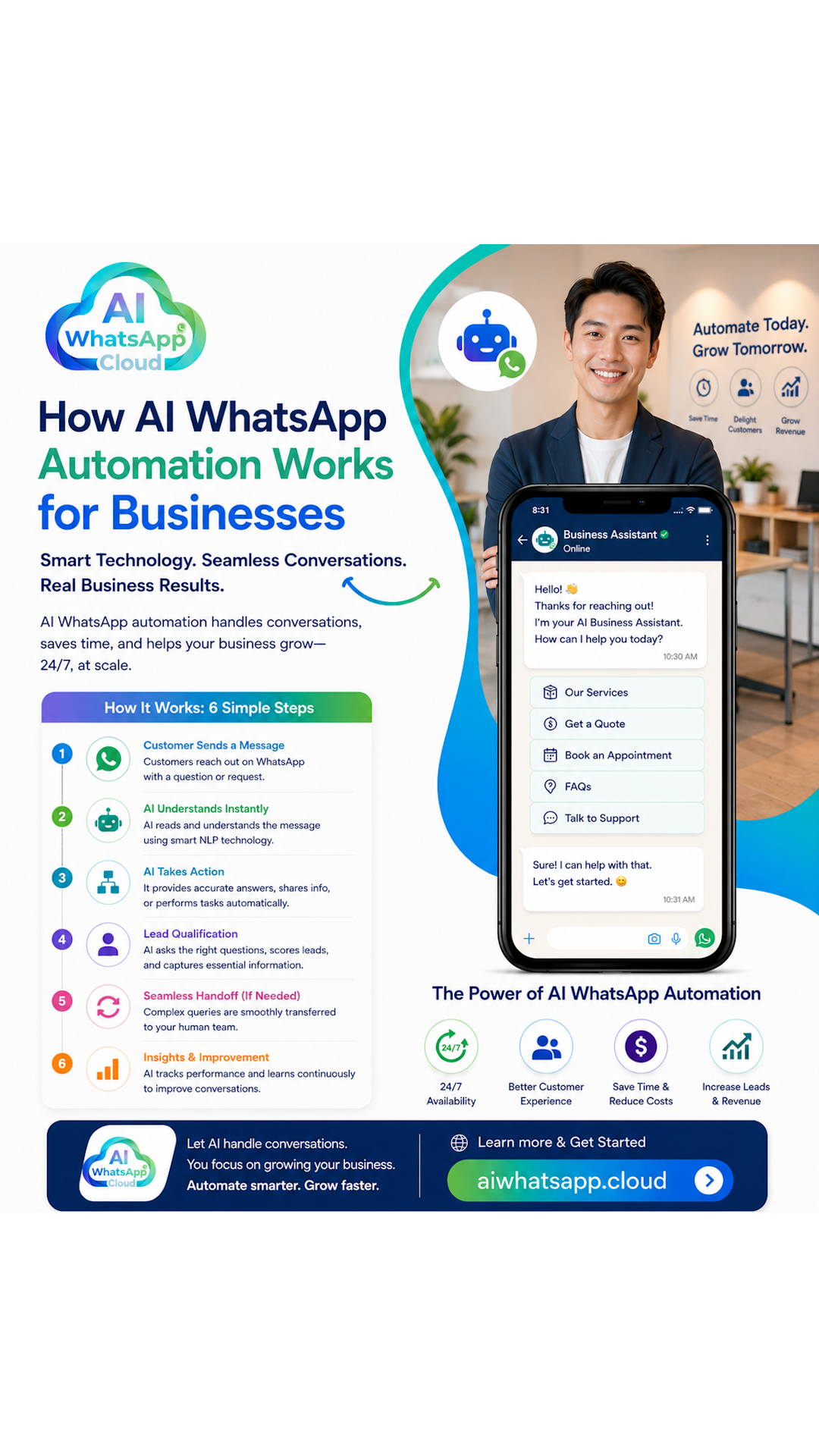
AI WhatsApp Automation: How AI WhatsApp Automation Works for Businesses
Customers are already messaging businesses on WhatsApp.
They ask questions.
They request prices.
They enquire about services.
They book appointments.
They follow up on previous conversations.
For many businesses, WhatsApp has become an important customer communication channel.
But there is one major problem.
A business cannot manually reply to every customer conversation immediately.
This is where AI WhatsApp automation comes in.
AI WhatsApp automation combines artificial intelligence with automated WhatsApp workflows to help businesses manage customer conversations more efficiently.
Instead of treating WhatsApp as a simple messaging app, businesses can turn it into a structured customer communication and lead management workflow.
What Is AI WhatsApp Automation?
AI WhatsApp automation is the use of AI-powered technology to automate selected customer conversations and business workflows on WhatsApp.
The AI can understand a customer's message and respond based on the business's information, services and conversation rules.
For example, a customer may send:
“Hi, I want to know more about your service.”
Instead of waiting for a staff member to manually reply, the AI WhatsApp assistant can begin the conversation.
It may ask:
“Sure. Are you looking for our service for your home or business?”
The conversation can then continue based on the customer's answers.
The goal is not simply to send a pre-written chatbot message.
The goal is to understand the conversation and guide the customer towards the right next step.
How Does AI WhatsApp Automation Work?
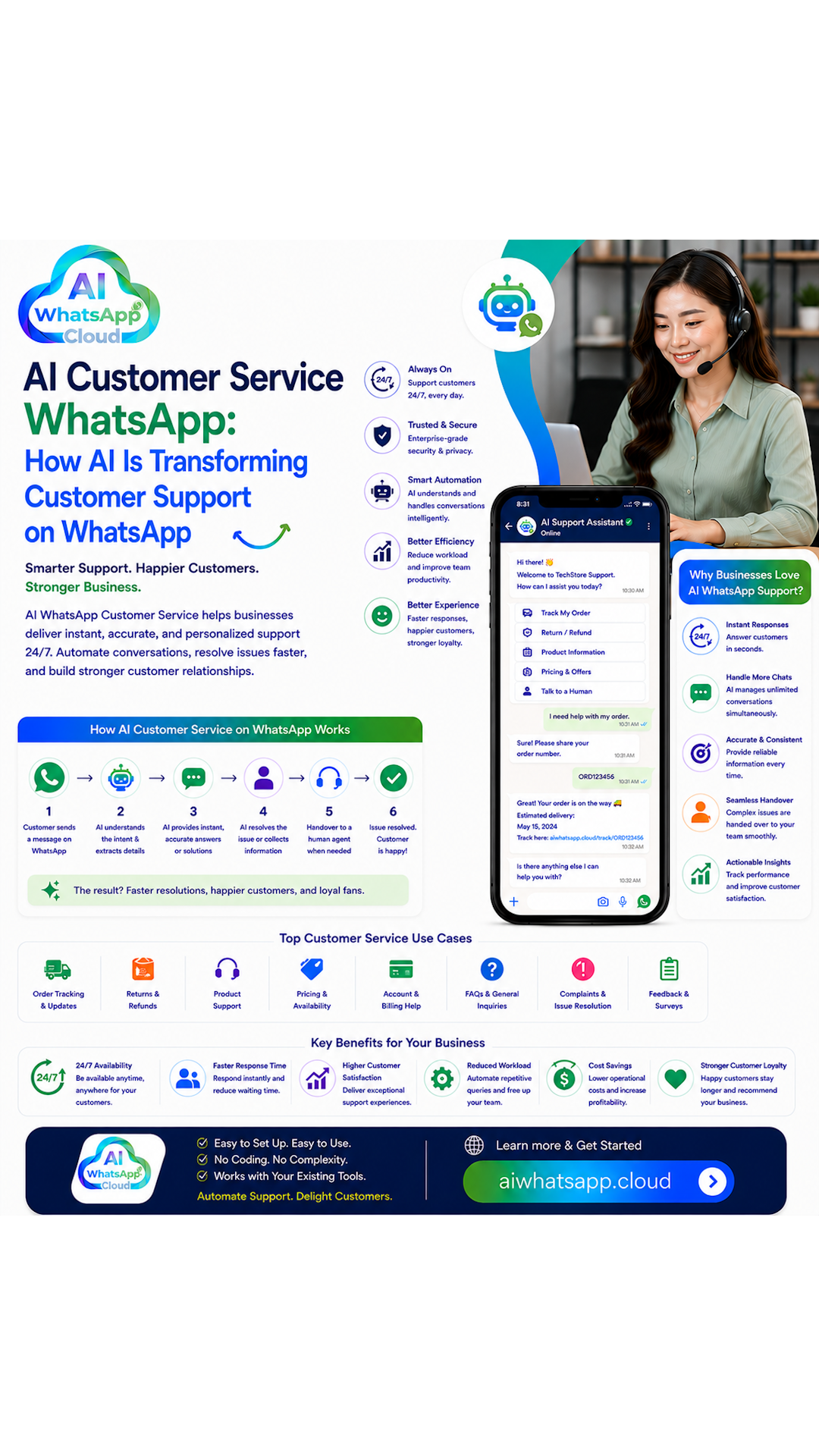
A typical AI WhatsApp automation workflow can be divided into several stages.
1. Customer Sends a WhatsApp Message
The customer starts a conversation.
The message could be:
“How much is your service?”
“Do you have availability this week?”
“I want to book an appointment.”
“Can I get a quotation?”
The conversation begins naturally.
2. AI Understands the Customer's Intent
The AI analyses the customer's message and identifies what the customer is trying to do.
For example:
- Asking a question
- Looking for a price
- Requesting a quotation
- Booking an appointment
- Looking for a product
- Reporting a problem
This is important because different customer intentions require different responses.
3. AI Responds Based on Business Information
The AI WhatsApp assistant can be trained or configured with business information.
This may include:
- Products
- Services
- Frequently asked questions
- Business policies
- Operating information
- Booking procedures
The AI then uses the relevant information to continue the conversation.
4. AI Asks the Right Questions
A good AI WhatsApp automation workflow does not ask customers to fill in a long form.
Instead, it can collect information naturally through the conversation.
For example:
“Which area are you located in?”
“What type of service do you need?”
“When would you like to arrange the appointment?”
This creates a more conversational customer experience.
5. AI Qualifies the Conversation
Not every customer enquiry has the same value.
Some customers are just researching.
Others are ready to buy or book.
AI WhatsApp automation can help identify the customer's intent.
For example:
“Customer is looking for a quotation and would like to start this month.”
This gives the sales or service team better context.
6. Human Team Takes Over When Necessary
AI automation does not mean every conversation must be handled by AI.
Some conversations require a human.
For example:
- Complex questions
- Special requests
- Complaints
- Negotiations
- Technical issues
The AI can hand the conversation to a human team member when the situation requires human judgement.
AI WhatsApp Automation vs Traditional Chatbots
Many businesses have used chatbots before.
Traditional chatbots often work with fixed buttons and keyword triggers.
For example:
Press 1 for Sales.
Press 2 for Support.
Press 3 for Pricing.
This can work for simple workflows.
However, customers do not always communicate in predictable ways.
A customer may write:
“Hey, I need help choosing something for my business.”
A traditional chatbot may not know what to do.
An AI WhatsApp assistant can understand the broader meaning of the message and continue the conversation more naturally.
The difference is simple:
Traditional automation follows a fixed path.
AI WhatsApp automation can understand the conversation.
What Can AI WhatsApp Automation Do?
AI WhatsApp automation can support many business workflows.
Customer Support
The AI can answer common customer questions and provide information based on the business's approved knowledge.
Lead Qualification
The AI can ask questions to understand a potential customer's requirements.
Appointment Booking
The AI can guide customers through appointment or service booking enquiries.
Sales Conversations
The AI can help customers understand products and services before handing the conversation to the sales team.
Service Enquiries
Customers can explain what they need and the AI can collect important details.
Human Handover
The AI can identify when a human team member should continue the conversation.
Follow-Up Workflows
Businesses can create structured follow-up processes for customers who have not completed the next step.
Why Businesses Are Exploring AI WhatsApp Automation
The main reason is simple.
Businesses are receiving more customer conversations than their teams can manually manage efficiently.
A business may already have WhatsApp leads.
The problem is often what happens after the message arrives.
The customer sends an enquiry.
The team is busy.
The reply is delayed.
The customer continues searching.
This creates a communication gap.
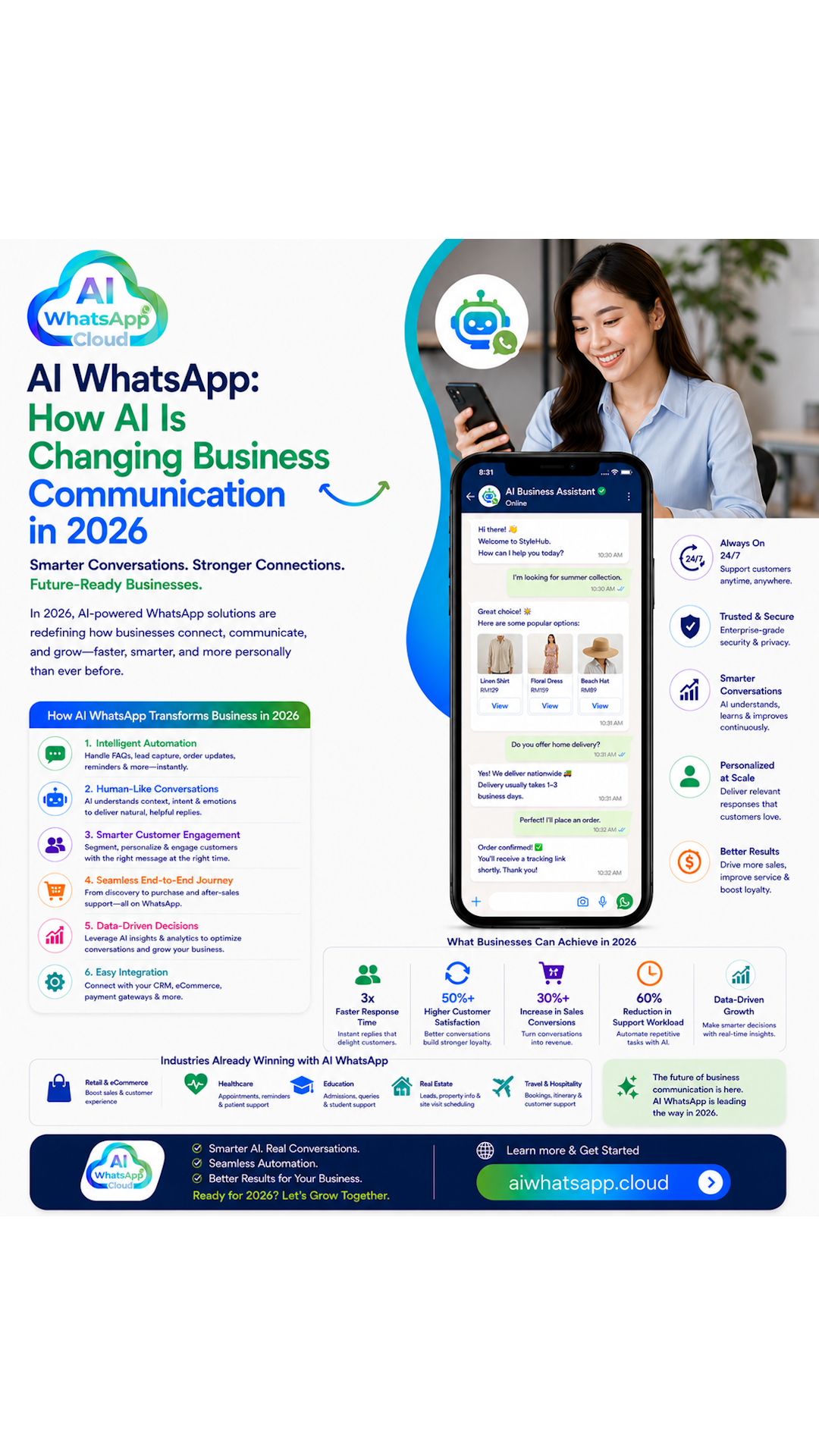
AI WhatsApp automation helps businesses respond to the first conversation faster and organise the next step.
The Biggest Benefit: Faster Customer Communication
Customers do not always message during office hours.
They may send an enquiry at night.
They may ask a question while the sales team is busy.
They may want to book a service during a weekend.
AI WhatsApp automation allows a business to provide a first response without requiring a staff member to manually type every message.
This does not mean every customer question is automatically solved.
It means the conversation can start immediately.
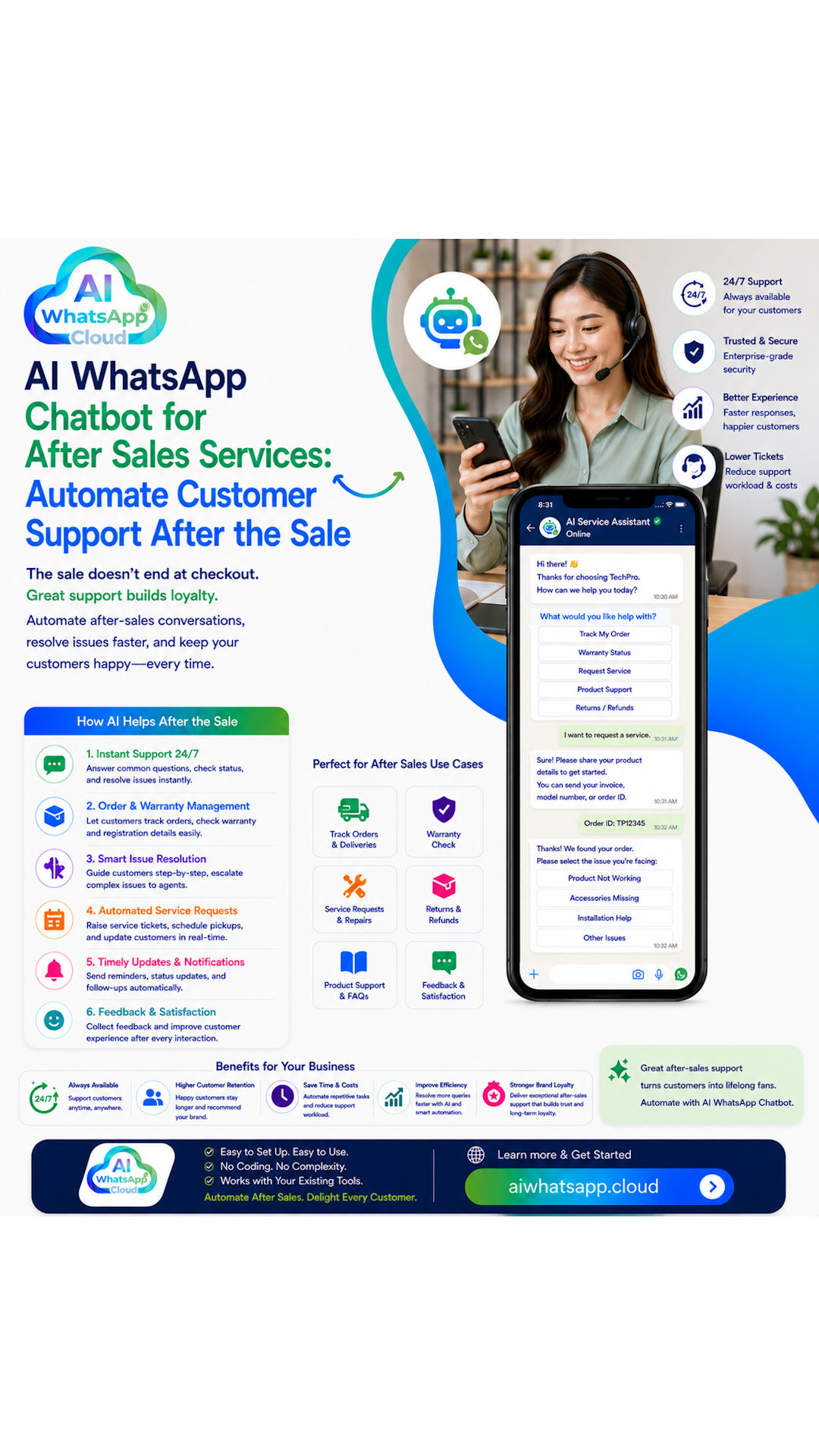
AI WhatsApp Automation Helps Reduce Repetitive Work
Many businesses answer the same questions every day.
For example:
“What are your services?”
“How much does it cost?”
“Where are you located?”
“When are you available?”
When staff repeatedly answer the same questions, valuable time is spent on repetitive communication.
AI WhatsApp automation can handle the first level of these conversations.
The team can then focus on more important customer conversations.
AI WhatsApp Automation Is Not About Replacing People
This is one of the biggest misunderstandings about AI automation.
The purpose of AI WhatsApp automation is not to remove every human conversation.
The best workflow is usually a combination of AI and human support.
The AI can handle:
- Repetitive questions
- First responses
- Basic information collection
- Lead qualification
The human team can focus on:
- Complex customer needs
- Sales decisions
- Negotiations
- Customer relationships
The AI handles the repetitive work.
The human team handles the situations where human judgement matters.
Which Businesses Can Use AI WhatsApp Automation?
AI WhatsApp automation can be applied to many industries.
Examples include:
- Dental clinics
- Beauty salons
- Real estate agents
- Logistics companies
- Tuition centres
- Pet hotels
- Aircon servicing companies
- Restaurants
- Automotive workshops
- Hotels
- Professional services
The industry may be different.
But the communication problem is often similar.
Customers ask questions on WhatsApp, and businesses need to respond efficiently.
A Simple AI WhatsApp Automation Example
Imagine a customer sends:
“Hi, I need a quotation.”
The AI WhatsApp assistant can respond:
“Sure, I can help with that. What type of service are you looking for?”
The customer replies:
“I need service for my shop.”
The AI continues:
“Thanks. Which area is your shop located in?”
The customer provides the location.
The AI then collects the basic information and identifies the enquiry as a quotation request.
The business team receives the conversation with useful context.
Instead of starting with:
“Hi, how can I help?”
The team can continue with:
“Thanks for sharing the details. We understand you are looking for service for your shop in this area. Let us help you with the next step.”
This creates a much more organised customer journey.
What Should Businesses Automate First?
Businesses do not need to automate everything on day one.
A better approach is to start with one clear workflow.
For example:
Option 1: Frequently Asked Questions
Automate the questions your team answers every day.
Option 2: Lead Qualification
Collect the information your sales team needs.
Option 3: Appointment Enquiries
Help customers move towards a booking.
Option 4: Service Requests
Understand the customer's problem before human follow-up.
Option 5: Human Handover
Create a structured process for moving conversations to the team.
Starting with one workflow makes it easier to measure the results.
The Future of Business Communication Is Becoming More Conversational
Customers do not want to learn a complicated system before contacting a business.
They want to send a message.
They want to explain what they need.
They want a useful response.
AI WhatsApp automation helps businesses build a more conversational customer communication experience.
The future is not simply about adding more automation.
The future is about making automation understand the customer conversation better.
Final Thoughts
WhatsApp is already an important communication channel for many businesses.
The challenge is managing customer conversations efficiently as enquiries increase.
AI WhatsApp automation can help businesses respond faster, qualify leads, automate repetitive communication and create a more organised customer journey.
The most effective approach is not to automate every conversation.
It is to identify the repetitive workflows that slow down your business and automate them intelligently.
AI WhatsApp automation helps businesses turn everyday WhatsApp conversations into structured customer communication workflows.
If your business is receiving customer enquiries on WhatsApp and your team is spending too much time replying manually, visit AIWhatsApp.Cloud to explore how AI WhatsApp automation can help your business.